
The Permaculture Flower

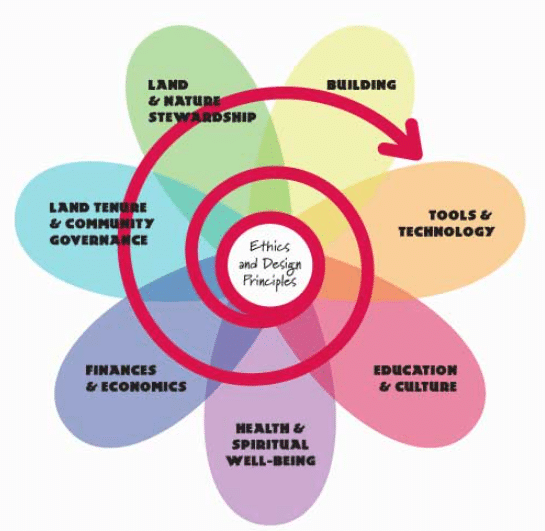
Permaculture is a broad design system that extends beyond gardening and land use—it’s a way to structure entire communities, lifestyles, and economies in ways that are sustainable and regenerative. To visualize the many aspects of permaculture, David Holmgren developed the Permaculture Flower, which highlights seven interconnected domains. These domains represent the broad range of human activities where permaculture can be applied, from managing natural resources to building communities and economies.
The Permaculture Flower is not just a guide for practical sustainability but also a blueprint for integrating permaculture into every aspect of life.
The Seven Domains of the Permaculture Flower
Each of the seven petals of the Permaculture Flower corresponds to a different area of human life and culture. These domains are interconnected, meaning that improvements in one area often lead to benefits in others.
Let’s explore each domain and see how they contribute to a holistic permaculture approach:
1. Land and Nature Stewardship
This domain encompasses everything related to caring for the Earth—managing land, water, and biodiversity in a sustainable way. It includes practices like:
- Permaculture gardening: Growing food in ways that mimic natural ecosystems.
- Agroforestry: Integrating trees into agricultural systems to improve soil health and biodiversity.
- Soil regeneration: Using techniques such as composting and mulching to build rich, fertile soil.
Caring for the land ensures that we create resilient ecosystems that provide for human needs without depleting natural resources.
2. Building
Sustainable architecture and natural building techniques play a key role in permaculture. This domain focuses on designing homes, structures, and infrastructure that are energy-efficient, environmentally friendly, and supportive of healthy living.
Examples include:
- Passive solar design: Using natural light and heat to minimize energy use.
- Natural building materials: Using resources like straw, clay, and reclaimed materials to reduce the carbon footprint of construction.
- Tiny homes: Creating smaller, more energy-efficient living spaces that reduce resource consumption.
Through thoughtful design, we can create buildings that work in harmony with nature rather than against it.
3. Tools and Technology
This domain explores the role of appropriate, low-impact technology in sustainable living. Permaculture encourages the use of tools and technologies that are energy-efficient, durable, and non-polluting. It also promotes technologies that support local self-reliance.
Examples of appropriate technologies include:
- Solar panels and wind turbines: For generating renewable energy.
- Bicycles and hand tools: Low-energy alternatives to motorized machines.
- Water-saving devices: Greywater systems and drip irrigation to conserve water.
The aim is to reduce dependence on non-renewable energy and to choose tools that contribute to long-term sustainability.
4. Culture and Education
Education and cultural transformation are at the heart of spreading permaculture. This domain focuses on sharing knowledge, skills, and stories that inspire others to adopt more sustainable lifestyles. It includes:
- Permaculture education: Offering courses, workshops, and community events to spread permaculture principles.
- Storytelling and media: Using books, films, and social media to raise awareness of sustainability issues.
- Celebrating local culture: Embracing local traditions and practices that promote sustainability and resilience.
Building a strong culture of sustainability is essential for creating lasting change.
5. Health and Spiritual Well-being
True sustainability includes caring for our physical, mental, and spiritual well-being. This domain emphasizes holistic approaches to health and well-being that are in harmony with nature. Key aspects include:
- Nutrition: Eating locally grown, organic food to nourish both body and planet.
- Physical activity: Engaging in meaningful work, gardening, or nature walks to stay physically active and connected to the Earth.
- Mental health: Creating spaces for relaxation, reflection, and community connection.
A permaculture lifestyle promotes balance between body, mind, and spirit, fostering overall resilience and well-being.
6. Finance and Economics
Permaculture also offers solutions for creating ethical and sustainable economic systems. In this domain, the focus is on building local economies that support environmental health and social justice. Examples include:
- Local currencies: Encouraging the use of alternative currencies or barter systems to promote local trade.
- Ethical investment: Choosing investments that support renewable energy, sustainable agriculture, and social enterprises.
- Sharing economies: Reducing waste and consumption by promoting community sharing, co-ops, and tool libraries.
The goal is to move away from exploitative, unsustainable economic practices and toward systems that value cooperation, fairness, and long-term sustainability.
7. Land Tenure and Community Governance
This domain addresses issues of land ownership, governance, and community organization. It’s about ensuring that land and resources are managed in ways that benefit all members of a community. Key strategies include:
- Cooperative ownership: Encouraging community land trusts or co-housing models where resources are shared fairly.
- Participatory decision-making: Involving all community members in decision-making through consensus or collaborative processes.
- Regenerative communities: Building intentional communities that focus on sustainability, cooperation, and resilience.
Creating fair, inclusive systems for managing land and resources is essential for building strong, self-sufficient communities.
Applying the Permaculture Flower to Your Life
The Permaculture Flower provides a comprehensive guide for integrating sustainability into all aspects of life. By working with these seven domains, we can create systems that are not only sustainable but also regenerative—improving both the environment and human well-being.
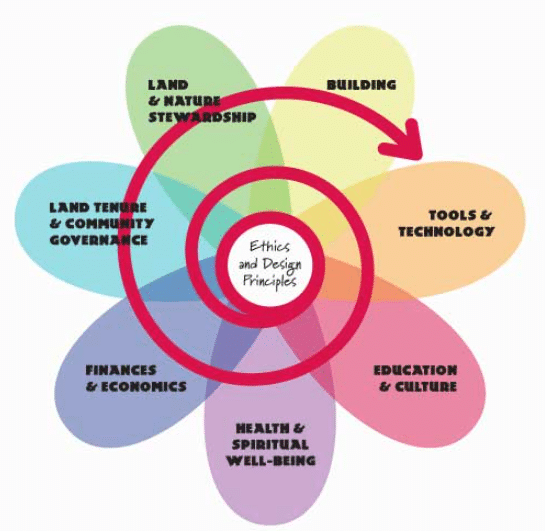
(Source of the image to permacultureprinciples.com)
You don’t need to tackle all seven domains at once. Start by focusing on one or two that resonate most with your current life situation—whether that’s learning to grow your own food, designing an eco-friendly home, or becoming involved in your local community. Over time, as you apply permaculture principles across different areas of life, you’ll build a more resilient, interconnected system.
Coming Next
The next article in our series will cover Practical Applications of Permaculture, showing you real-world examples of how permaculture principles and ethics are applied in everything from gardening to energy use.
Read the full article on Practical Applications of Permaculture (publishing on: October 10, 2024)
 English
  Deutsch
  Español
  Français
  Italiano
[…] introduction. Upcoming topics include the Ethics of Permaculture, Permaculture Principles, and the Permaculture Flower. Stay […]